Introducing Amazon CloudWatch Omni: A Unified Observability Framework for AI Agents and Modern Applications

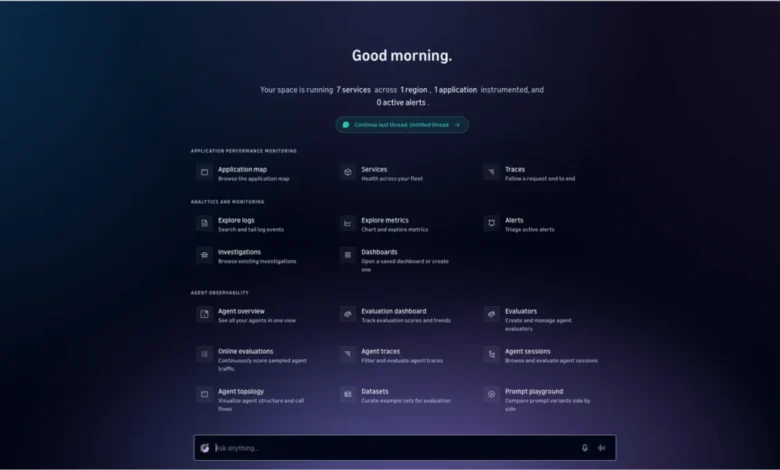
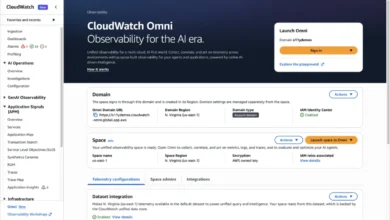
Amazon CloudWatch has officially launched CloudWatch Omni, a comprehensive, AI-powered observability platform designed to bridge the gap between traditional software monitoring and the non-deterministic nature of agentic AI systems. This new solution provides a dual-surface experience, operating both as a native extension within popular Integrated Development Environments (IDEs) and as a standalone web interface, bypassing the need for constant interaction with the traditional AWS Management Console. By centering on open standards and an evaluation-driven workflow, CloudWatch Omni addresses the growing complexity faced by engineering teams as they transition from static software to dynamic, autonomous AI agents.
The Observability Crisis in Agentic AI
The deployment of AI agents—systems capable of reasoning, utilizing tools, and executing multi-step tasks—has introduced significant hurdles for DevOps and Site Reliability Engineering (SRE) teams. Traditional monitoring tools, which rely heavily on error rates, latency, and throughput metrics, are often insufficient for capturing the nuances of generative AI. In an agentic environment, a system might technically "succeed" by returning a result without throwing an error code, while the quality of the output remains factually incorrect, incoherent, or dangerously hallucinated.
Because agent behavior is inherently non-deterministic, small changes to a system prompt or a model configuration can result in cascading failures that are difficult to trace using legacy logs. Historically, developers have been forced to oscillate between siloed AI-specific debugging tools and general infrastructure dashboards, leading to high levels of "context-switching" that reduce engineering velocity and increase the likelihood of overlooking subtle regressions. CloudWatch Omni aims to unify these disparate workflows, offering a cohesive environment that integrates directly into the developer’s existing coding pipeline.

Architectural Overview and Core Features
CloudWatch Omni is built on the foundation of open standards, notably OpenInference and the AWS Distro for OpenTelemetry (ADOT). By utilizing these protocols, the platform remains provider-agnostic, supporting agents built with frameworks such as LangChain, LangGraph, CrewAI, the Vercel AI SDK, and the OpenAI SDK, as well as native support for Amazon Bedrock’s AgentCore.
The platform functions through two primary interfaces:
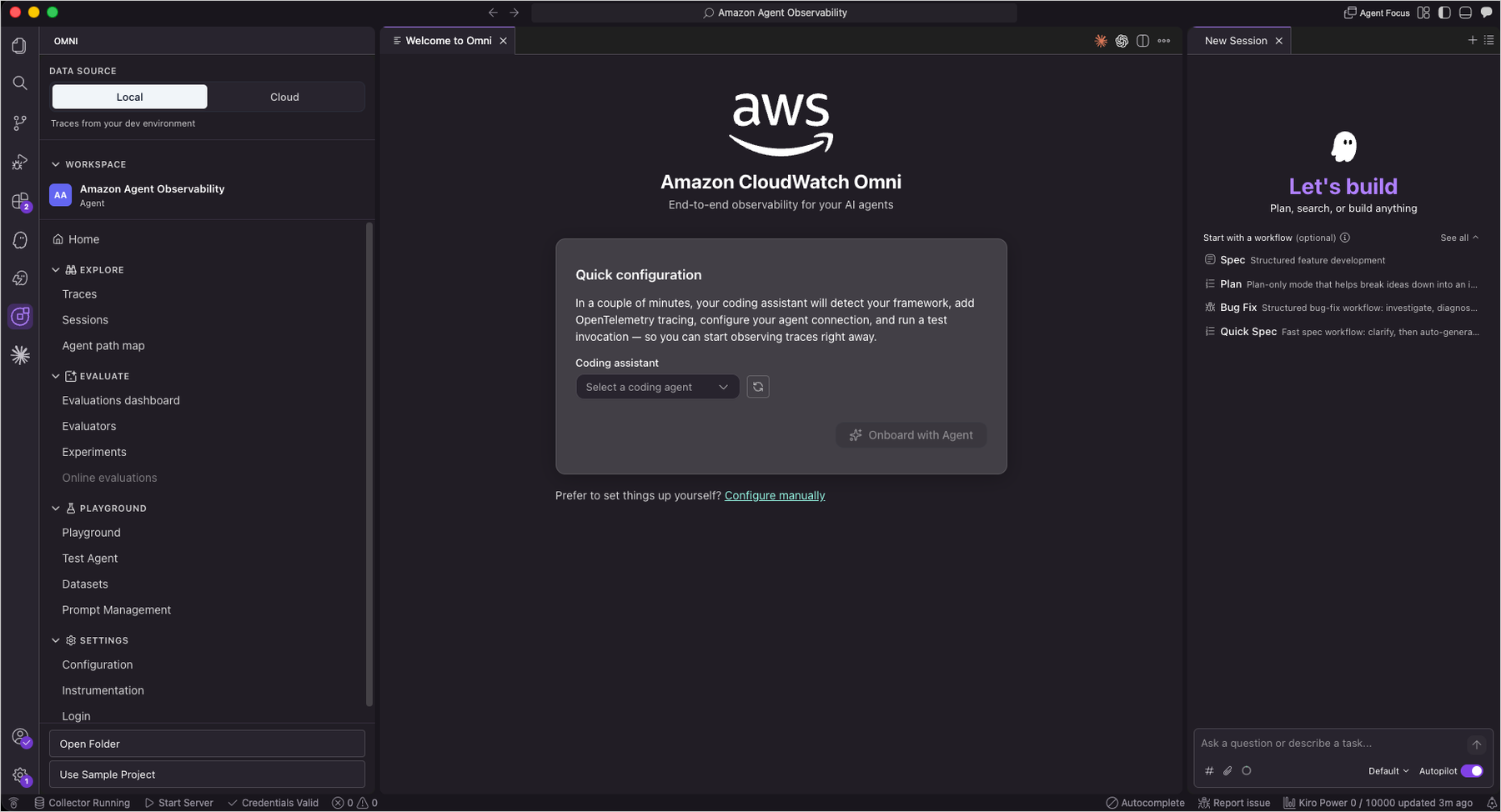
- The IDE Extension: Available for VS Code and Kiro, this interface allows developers to inspect traces, test prompts, and run evaluations in real-time without leaving their codebase.
- The Standalone Web Experience: A browser-based dashboard accessible via Single Sign-On (SSO) that allows operations teams to monitor the fleet, analyze production performance, and investigate incidents without requiring access to the broader AWS Management Console.
A critical component of this ecosystem is the "Cloud Login" feature. While the platform functions entirely in a local-only capacity during the initial development phase, developers can choose to link their local environment to their AWS account. This transition enables persistent telemetry storage, team-based trace sharing, and the utilization of cloud-scale analytics, providing a seamless bridge from local experimentation to production-grade monitoring.
Deep Dive into Evaluation and Traceability
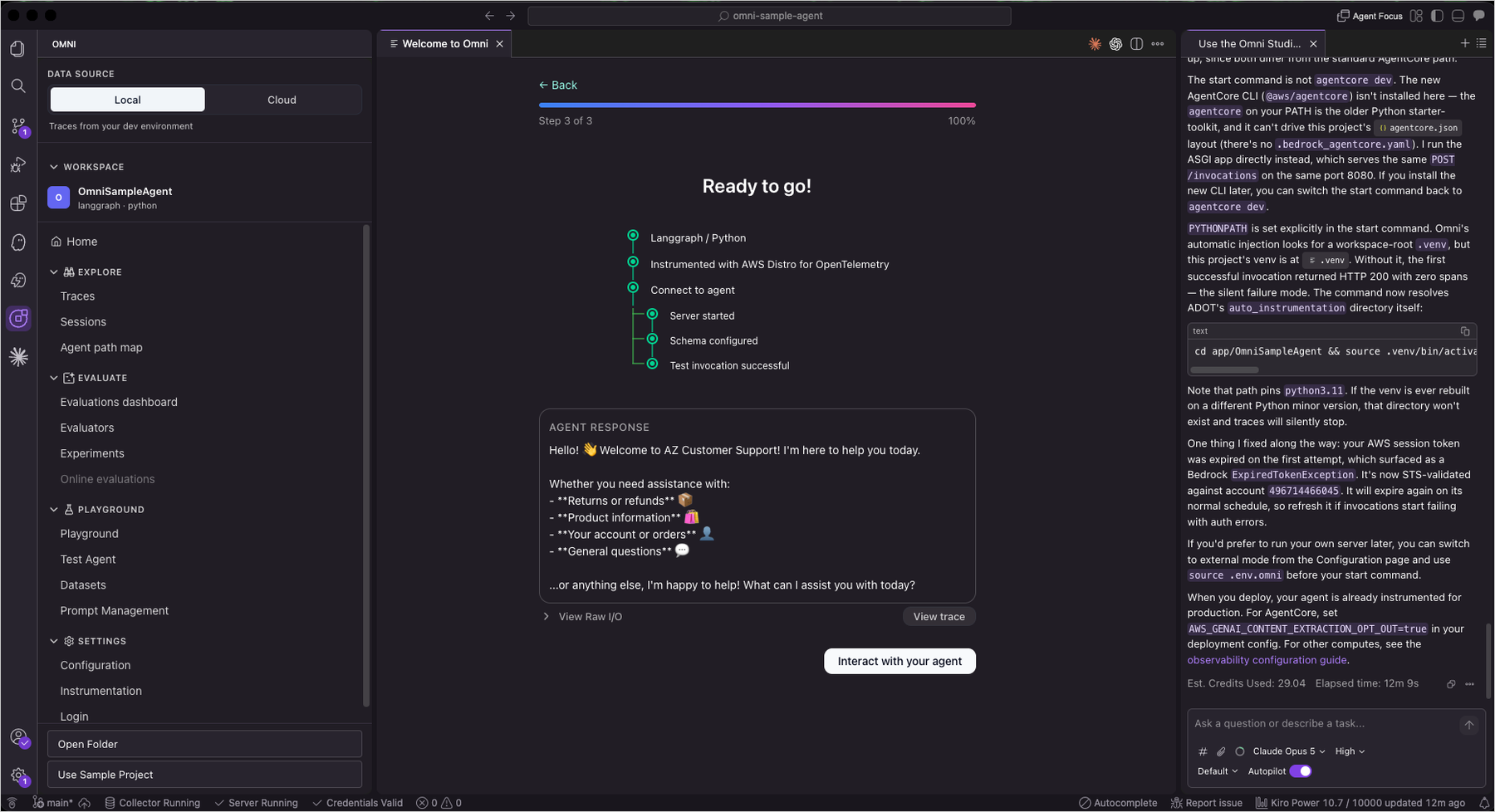
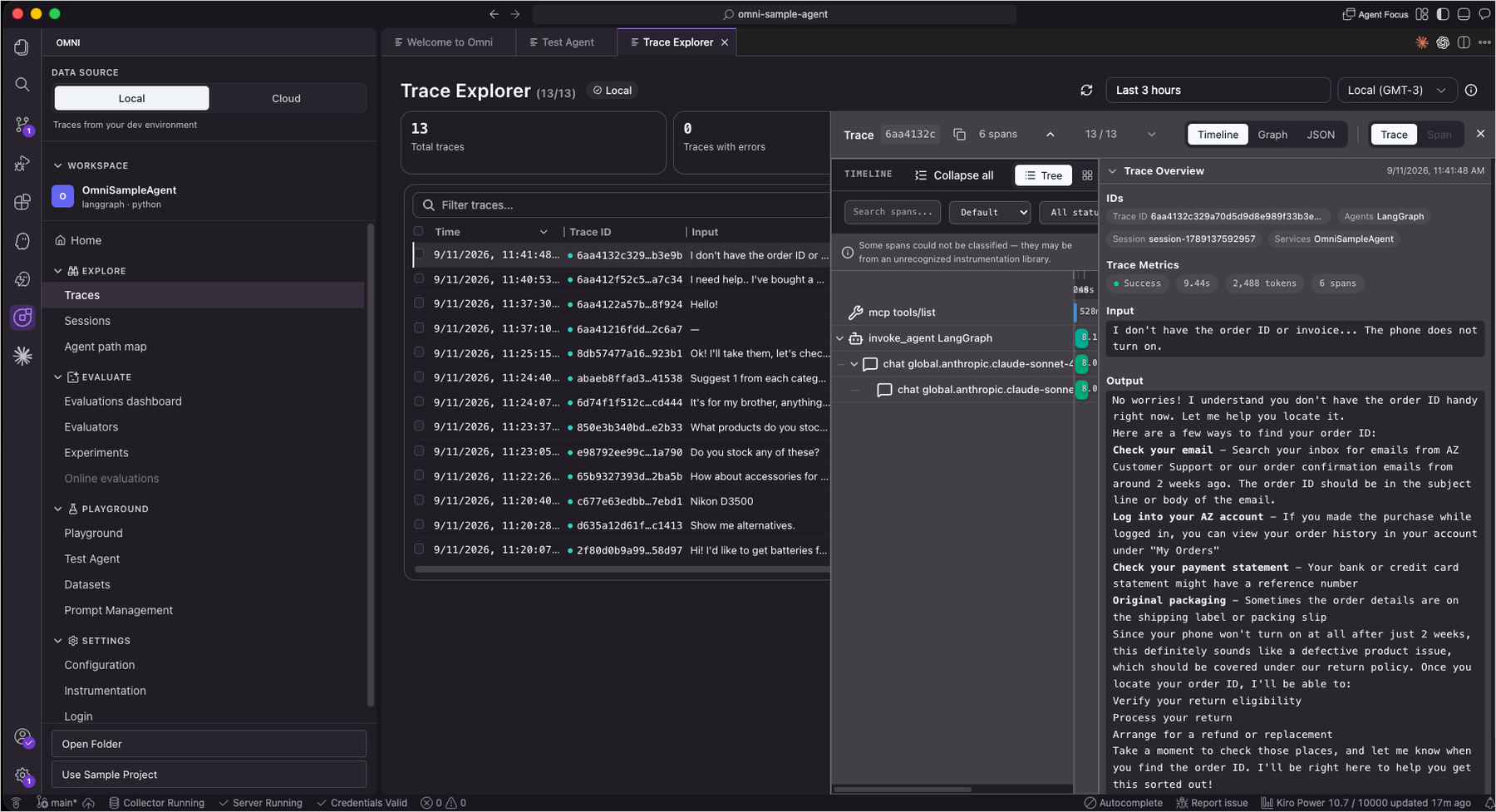
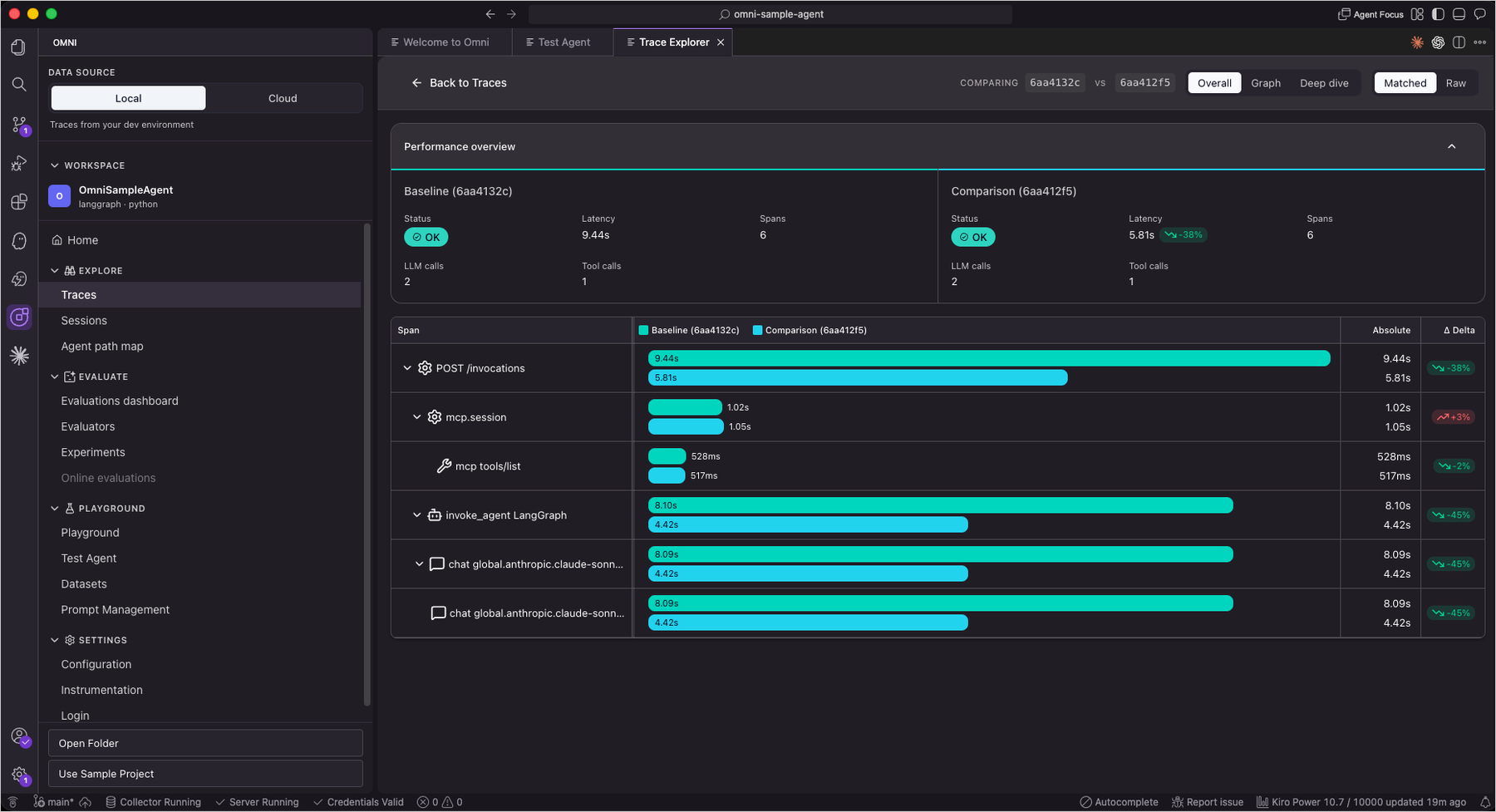
At the heart of CloudWatch Omni is the Trace Explorer, a visualization tool that maps the entire lifecycle of an agent’s execution. Unlike standard request logs, these traces provide a hierarchical view of every LLM call, tool invocation, and reasoning step. This visibility is vital for debugging "black box" behavior; if an agent fails to provide the correct answer, developers can use the "Ask Assistant" feature to query the trace history, allowing the AI to identify anomalies or explain why specific tools were prioritized over others.
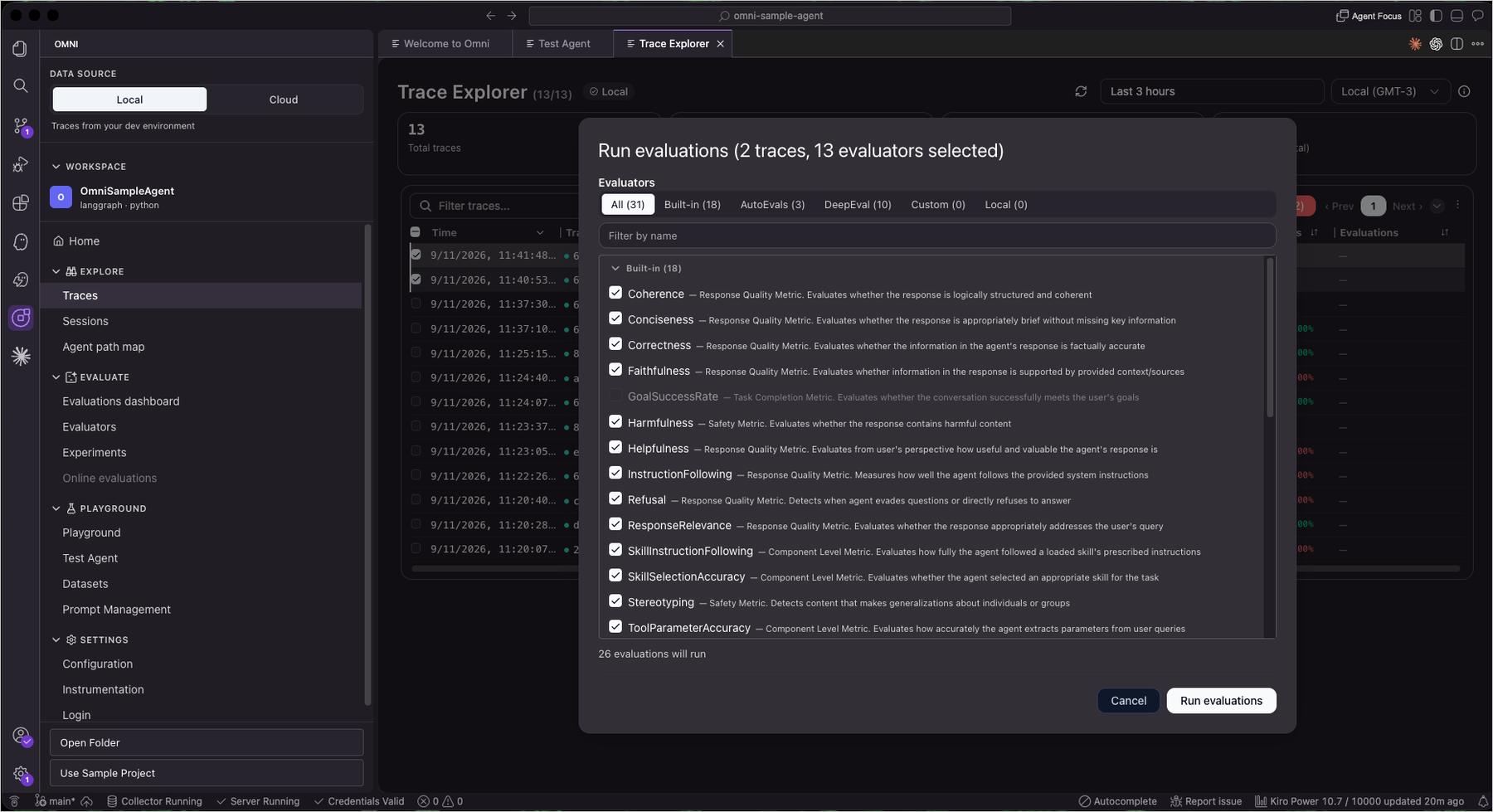
The platform also introduces an evaluation-driven workflow. CloudWatch Omni includes 17 built-in evaluators that score responses across dimensions such as faithfulness, coherence, retrieval quality, and routing correctness. These tools facilitate the creation of "golden datasets"—curated sets of test cases that allow teams to run regression tests automatically. By comparing prompt versions side-by-side in the "Playground," teams can quantify the impact of changes before deployment, effectively applying scientific rigor to the otherwise speculative process of prompt engineering.
Market Context and Industry Implications
The release of CloudWatch Omni follows a period of rapid acceleration in the AI infrastructure market. As enterprises move past the prototyping phase of generative AI, the focus has shifted from "can we build it?" to "can we operate it reliably?" Industry analysts suggest that observability is currently the primary bottleneck for the mass-market adoption of agentic systems.
By providing a tool that is free to use at the IDE level and does not require initial AWS infrastructure, Amazon is positioning CloudWatch Omni as a low-friction entry point for developers. This strategy mirrors the broader industry trend of "developer-first" tooling, where the objective is to capture the attention of the individual engineer before scaling to enterprise-wide operations.
Furthermore, the integration of third-party evaluators—such as Braintrust, DeepEval, and Ragas—within the Omni workflow suggests a strategic move toward an open ecosystem. By refusing to lock users into a proprietary evaluation framework, AWS is positioning CloudWatch Omni as a central orchestration hub for existing AI stacks.
Implementation and Getting Started
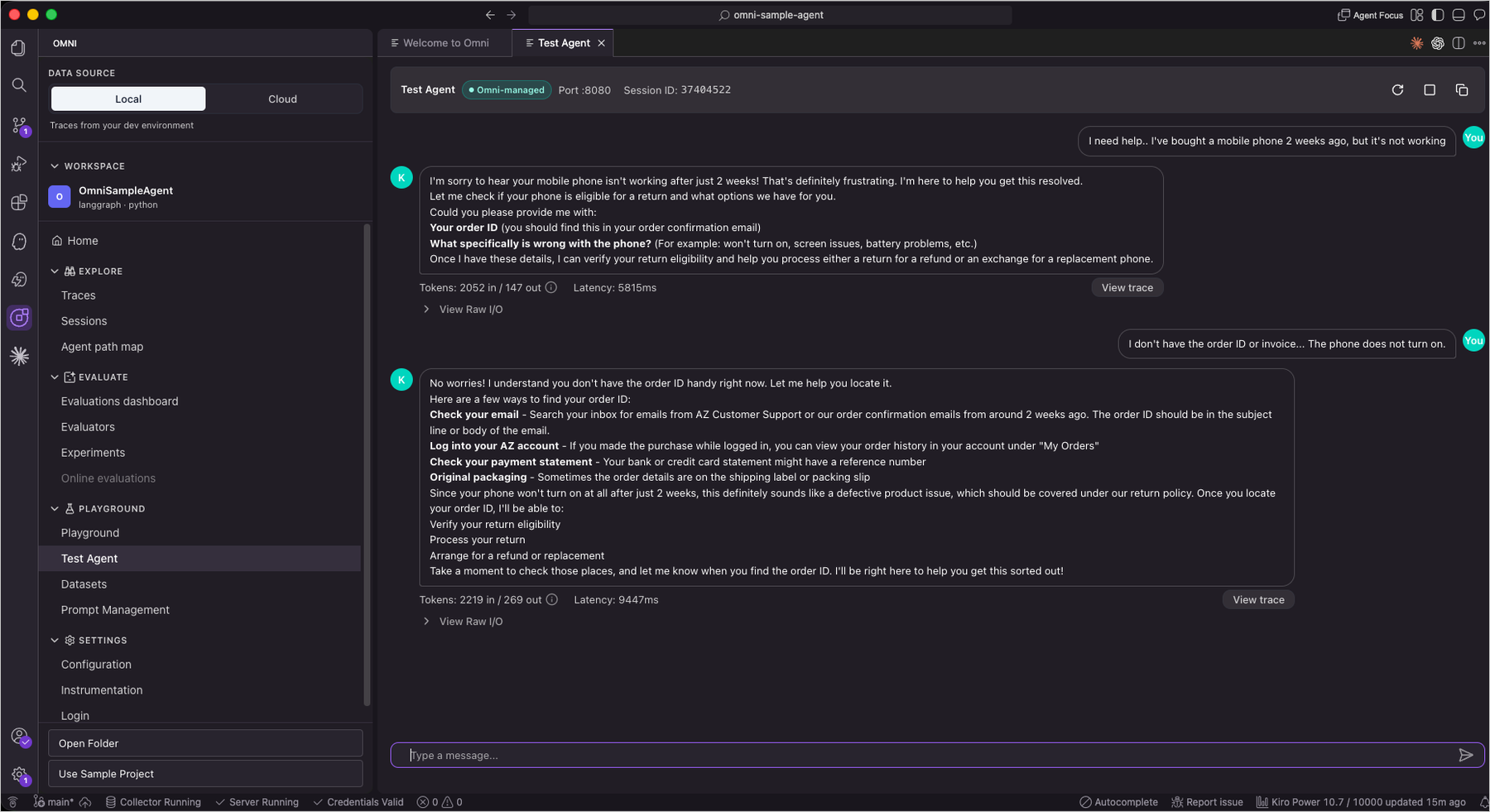
For teams looking to adopt CloudWatch Omni, the setup process is designed for rapid integration. The platform provides automated instrumentation through AI code assistants like Kiro and Claude Code, which can detect the agent framework being used and configure the necessary telemetry hooks automatically. Alternatively, manual instrumentation is available via Python and TypeScript code snippets.
The workflow typically follows a structured trajectory:
- Initialization: Installing the extension and creating a project, either from a sample or from scratch.
- Instrumentation: Adding OpenTelemetry tags to the agent code.
- Execution & Tracing: Running the agent locally and reviewing the execution flow via the Trace Explorer.
- Evaluation: Running datasets through the built-in evaluators to establish a quality baseline.
- Deployment & Monitoring: Syncing the local project to the cloud to monitor production performance and share findings with the wider organization.
Broader Impact on Enterprise AI
The introduction of this tool signals a maturation of the AI development lifecycle. Historically, the "experimental" nature of AI was accepted as an inherent risk. With tools like CloudWatch Omni, organizations can now apply traditional software engineering disciplines—such as version control, unit testing, and regression analysis—to AI agents.
The ability to visualize "Agent Topology," which displays the interconnections between sub-agents and tools, is particularly significant for complex systems. As agents become more specialized and interconnected, the risk of "prompt drift" or "tool-call loops" increases; the ability to identify these bottlenecks through a graphical interface will likely become a standard requirement for enterprise AI governance.
Conclusion and Future Outlook
CloudWatch Omni represents a significant milestone in the evolution of cloud-native observability. By collapsing the distance between the local IDE and the production dashboard, Amazon has addressed a critical friction point that has hindered the scalability of agentic systems. While the platform is currently in its early stages of widespread adoption, its focus on open standards and collaborative, multi-surface observability provides a robust foundation for teams tasked with maintaining the next generation of autonomous AI systems.
As of the current release, the tool is generally available, with the IDE extension provided as a free utility. For developers and SREs working with frameworks like LangChain or Bedrock, the platform offers a path toward greater predictability in an inherently unpredictable technological landscape. The integration of collaborative features and advanced evaluation capabilities marks a definitive shift toward treating AI agents as first-class, mission-critical components of the enterprise software stack.